Chiropractic Physician Training
The major focus of chiropractic is concerned with how the musculoskeletal and nervous systems interact with each other, as well as with the various other systems of the body (i.e., reproductive, digestive, endocrine, lymphatic/immunity, respiratory, urinary, and cardiovascular).
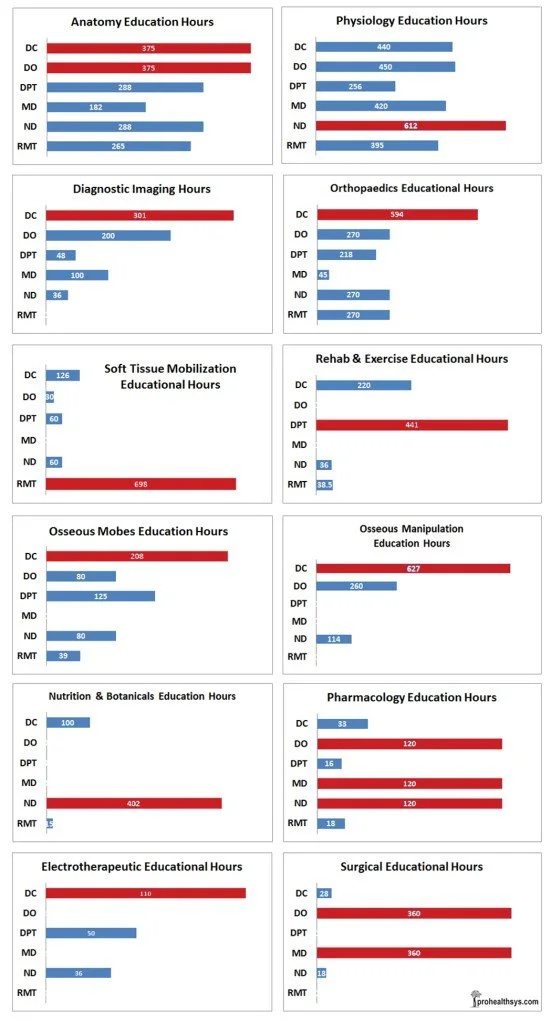
Keeping the body free from nerve interference has a direct positive benefit to all these body systems. As a result, chiropractors are intensively trained in these various systems, as well as in human anatomy and physiology, neurology, biomechanics, and disease pathologies.
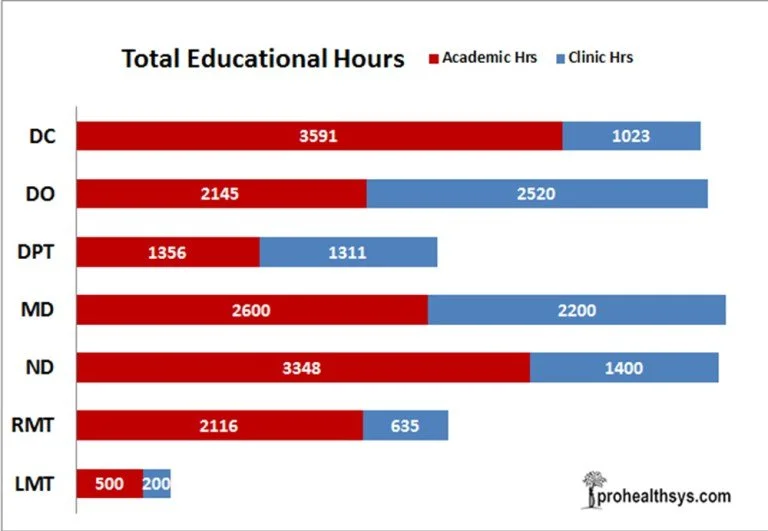
The Doctor of Chiropractic degree (D.C.) is a four-year program, the first two years of which are very similar to medical doctor (M.D.) programs. Chiropractors must pass four national board exams in order to practice, as well as a national board exam in physiotherapy if they would like to do rehab.
In addition to chiropractic adjustment technique classes, elective classes, and a two-year internship, the typical chiropractic program consists of the following coursework (no particular order):
Embryology
Histology
Osteology
Biochemistry I & II
Anatomy & Physiology
Public Health
Spinal Anatomy
Muscle/Skeletal Gross Anatomy
Visceral Gross Anatomy
Head and Neck Gross Anatomy
Motion Palpation I & II
Spinal Biomechanics
Neurophysiology
Chiropractic History & Philosophy
PNS (Peripheral Nervous System)
Neurodiagnosis
Muscle, Gait, Posture analyses
Wellness
Subluxation Theories
Genital-Urinary Diagnosis
Gastrointestinal Diagnosis
Emergency Clinical Assessment
Toxicology I &II
Instrumentation I & II
Ob/Gyn
Chiropractic Principles
Bacteriology & Virology
Physiology
Visceral Physiology
Nutrition
Radiology (I-XII)
X-Ray Physics
Visceral Diagnosis
Parasitology & Mycology
Research (I-IV)
CNS (Central Nervous System)
Orthopedic Diagnosis
Immunology
Disease Pathology I and II
Endocrinology
Geriatrics
Clinical Psychology
Soft Tissue Analysis
Pediatric Diagnosis/adjusting
Integrated Diagnosis
Professional Ethics
Jurisprudence
Advanced Imaging
Exercise Physiology